Theme
Story
Story
의학·공학·인문 분야 융합으로
학문 경계에 꽃을 피우다
Blooming at the Boundaries of Academia
Through the Convergence of Medicine, Engineering, and Humanities
한양인터칼리지 ‘인지융합과학전공’ 이현주 교수(의학과)
Professor Lee Hyun-ju,
“Major in Cognitive Convergence Science” at Hanyang Intercollege
(Department of Medicine)
- 글 김현지
- 사진 손초원
- Writing Kim Hyun-ji
- Photograph Son Cho-won
Scroll Down
우리는 ‘빅블러(Big Blur)’ 시대에 놓여 있다. 첨단기술 발전과 디지털 대전환 등으로 사회 여러 측면에서 급격한 변화가 일어나며 기존에 존재하던 산업의 경계가 흐려졌다. 한양인터칼리지 인지융합과학전공 주임교수인 이현주 교수는 산업 간 경계가 모호하게 뒤섞인 오늘날에야말로 레오나르도 다빈치와 같은 융합형 인재가 필요하다고 말했다.
We are living in the era of “Big Blur.” Rapid changes occurring across various aspects of society due to the advancement of cutting-edge technologies and digital transformation have blurred the boundaries of existing industries. Professor Lee Hyun-ju, program director of the Major in Cognitive Convergence Science at Hanyang Intercollege, stated that in today's world, where inter-industry boundaries have become ambiguously intertwined, convergence talents like Leonardo da Vinci are needed.

빅블러 시대, 경계는 이미 흐려졌다
“불확실성이 커진 빅블러 시대 속에서 우리는 급격한 변화를 마주하고 있습니다. 따라서 다양한 시각으로 문제를 해결할 실무형 전문가가 중요해졌죠. 레오나르도 다빈치는 의학과 디자인, 설계, 공학 등 다방면으로 뛰어난 인물이에요. 그처럼 모든 분야에서 탁월할 순 없겠지만, 융합적 사고로 여러 지식을 엮어 시너지를 낼 인재가 필요합니다.”
이현주 교수는 미래 사회로 나아갈수록 경계를 넘나드는 능력이 중요하다고 지적했다. 자연히 체계적이고 혁신적인 융합의 가치도 커진다. 소아청소년과 전문의로서 신생아·소아의 뇌 발달 분야를 연구하는 이현주 교수는 맞춤의료와 정밀의료, 질병 예측에 관심을 두며 공학, 심리, 교육 분야 연구진과 다양한 융합 연구를 추진해 왔다. 그 성과를 바탕으로 뇌 인지 능력 향상 소프트웨어와 하드웨어 개발 기업까지 창업했다. 그 누구보다 융합의 힘을 실감하는 이현주 교수. 그가 융합 연구를 수행하며 얻은 것은 꼭 필요한 것을, 적소, 적시에 투입하기 위한 핵심이 융합적 사고라는 깨달음이다.
In the Era of Big Blur, Boundaries Have Already Blurred
“In the era of Big Blur, where uncertainty has grown, we are facing rapid changes. Therefore, practice-oriented talents who can solve problems from diverse perspectives have become important. Leonardo da Vinci was an exceptional figure in multiple fields, including medicine, design, architecture, and engineering. While we may not be able to excel in every field like him, we need talents who can create synergy by weaving together various types of knowledge through convergent thinking.”
Professor Lee Hyun-ju pointed out that the ability to cross boundaries becomes increasingly important as we advance toward the future society. Naturally, the value of systematic and innovative convergence also grows. As a pediatrician specializing in brain development in neonates and children, Professor Lee Hyun-ju has pursued various convergence research with researchers in engineering, psychology, and education, with a focus on personalized medicine, precision medicine, and disease prediction. Based on these achievements, she even founded a company developing software and hardware to enhance brain cognitive abilities. As a researcher who realizes the power of convergence more than anyone else, what Professor Lee Hyun-ju gained from conducting convergence research is the insight that convergent thinking is the key to deploying exactly what is needed, in the right place, at the right time.
인간과 기술을 잇는 인지융합과학
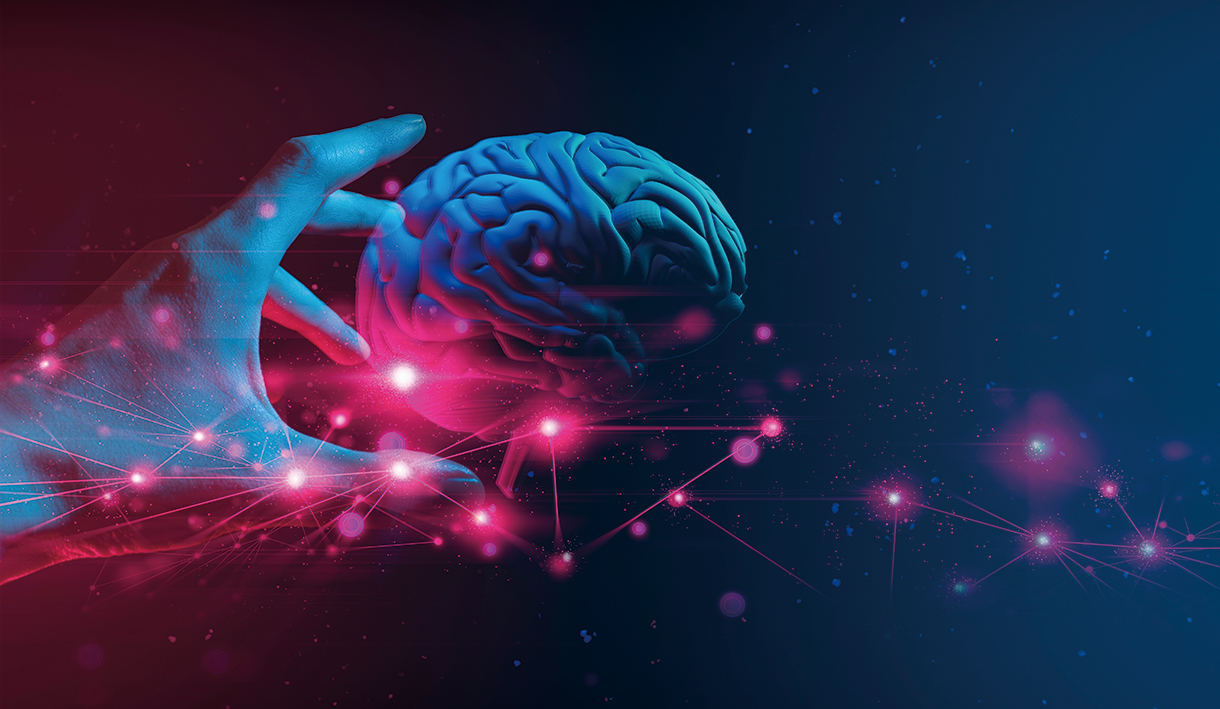
인지융합과학이란 인지 즉, 인간이 정보를 처리하고 지적 활동을 수행하는 과정을 다학제적으로 연구해 새로운 지식을 창출하는 학문이다. 인간의 뇌, 마음, 행동과 기술이 어우러지는 뇌과학 분야의 일종이다. 다양한 NBIC(Nanotechnology, Biotechnology, Information technology and Cognitive science) 기술과의 융합을 통해 많은 분야에서 중요한 역할을 수행하고 있다. 디지털 우울증 치료제나 뇌 혈류를 자극하는 전자약 등이 모두 의학과 공학, 심리학의 융합으로 탄생한 것이다.
국내에서 인지융합과학 관련 교육은 단독 전공 없이, 거의 심리학이나 정보학, 인공지능 등과 연계한 융합 트랙으로 개설돼 있다. 이마저도 대부분 대학원 과정이다. 국내에서 의대를 기반으로 정식 학부 교육을 설계한 사례는 매우 드물며, 이화여자대학교와 한양대학교가 대표적이다.
“타 대학에 개설된 인지융합과학은 거의 공대 기반입니다. 그러다 보니 심리나 임상 부문이 약할 수밖에 없죠. 더불어 의대 및 공대의 연구 역량이나 융합 분야 조합에서도 차이가 크기에, 우리 대학 인지융합과학전공이 더 퀄리티 높은 교육과 연구를 수행할 수 있습니다.”
한양대는 공대 연구 역량이 우수한 대학으로 손꼽힌다. 그렇기에 공학적 모델링, 임상 응용 등에서 차이가 날 수밖에 없다. 또 언어학이나 교육학이 함께 융합되는 커리큘럼을 짜 학생들의 이해도와 응용력을 높였다.
“산업체에서 프로그래머를 뽑을 때도 이제는 단순한 프로그래밍 능력을 넘어 기획, 경영, 관리자 역량을 갖췄거나 뭔가 새로운 아이디어를 접목할 플러스 요소가 있는 인재를 원합니다. 인공지능이 만들지 못하는 미래 가치를 창출하고, 인간과 기술을 연결할 수 있는 실무형 인재가 요구됩니다.”
Cognitive Convergence Science: Connecting Humans and Technology
Cognitive Convergence Science is a discipline that creates new knowledge through multidisciplinary research on cognition—that is, the process by which humans process information and perform intellectual activities. It is a branch of brain science where the human brain, mind, behavior, and technology converge. Through convergence with various NBIC (Nanotechnology, Biotechnology, Information Technology, and Cognitive Science) technologies, it plays an important role in many fields. Digital therapeutics for depression and electroceuticals that stimulate cerebral blood flow were all born from the convergence of medicine, engineering, and psychology.
In Korea, education related to cognitive convergence science is offered almost entirely as convergence tracks linked with psychology, informatics, or artificial intelligence, without a standalone major. Even these are mostly graduate-level programs. Cases where formal undergraduate education has been designed based on a medical school are extremely rare in Korea, with Ewha Womans University and Hanyang University being representative examples.
“Cognitive convergence science programs at other universities are almost entirely engineering-based. As a result, the psychology and clinical components are inevitably superficial. Moreover, since there are significant differences in the research capabilities of medical and engineering schools and in the combination of convergence fields, our university's Major in Cognitive Convergence Science can deliver higher-quality education and research.”
Hanyang University is recognized as a university with outstanding engineering research capabilities. Therefore, there are bound to be differences in engineering modeling and clinical applications. Additionally, a curriculum that integrates linguistics and education has been designed to enhance students' understanding and application skills.
“When companies hire programmers nowadays, they want talents who go beyond simple programming skills and possess planning, management, and leadership capabilities, or have a plus factor that can incorporate new ideas. Practice-oriented talents who can create future value that artificial intelligence cannot produce and connect humans with technology are in demand.”
의학과 공학, 인문 분야가 융합된 한양인터칼리지 인지융합과학전공은 인간과 기술을 잇는 교두보로서 새로운 패러다임을 제시할 것이다
The Major in Cognitive Convergence Science at Hanyang Intercollege, which converges medicine, engineering, and humanities, will present a new centurial paradigm as a bridgehead connecting humans and technology.
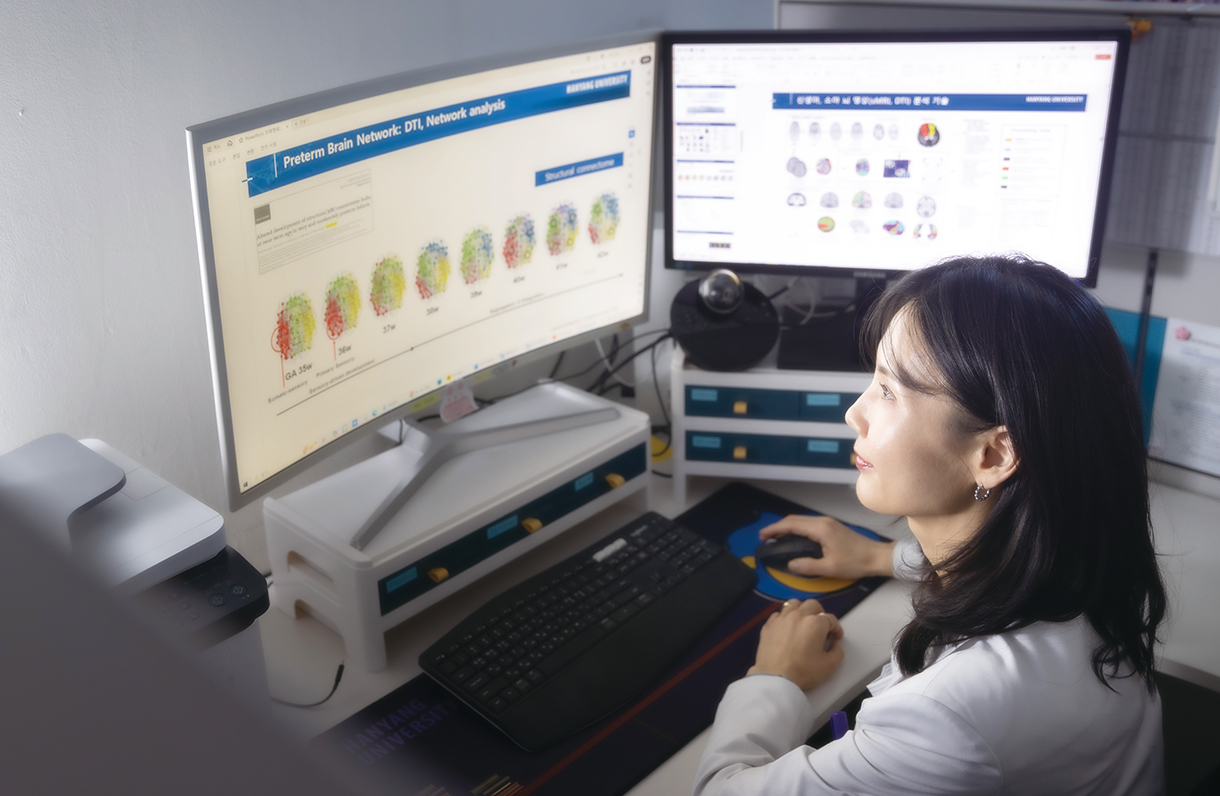
이현주 교수는 인간의 인지 과정을 다학제적으로 연구해 새로운 지식을 창출하는 인지융합과학전공이 미래 산업의 새로운 패러다임을 제시할 것이라 전망했다.
Professor Lee Hyun-ju predicted that the Major in Cognitive Convergence Science, which generates new knowledge through multidisciplinary research on human cognitive processes, will present a new paradigm for future industries.
인지 기반 4개의 트랙 운영
인지융합과학전공은 모호한 융합을 넘어 현장에 강한 실무형 융합을 추진하고 있다. 현재 △인지임상 프로젝트 △휴먼-컴퓨터 인터랙션(Human-computer interaction) 프로젝트 △인지신경과학 프로젝트 △AI 기반 인지공학 프로젝트 등 4개의 집중 실습 프로그램을 설계했다. 인문학, 사회과학, 인지심리학, 컴퓨터과학, 의학, 신경과학, 언어학, 데이터과학, 뇌과학, 공학 등 서로 다른 학문적 역량을 갖춘 교수진이 포진해 균형 잡힌 융합 역량을 배양한다. 학생들은 실제 의료 데이터를 분석하고 AI 기반 시스템 설계까지 배울 수 있다. 특히 한양대학교의료원, 한국뇌연구원, 카카오헬스케어, 크래프톤 등 우수한 병원, 연구소, 산업체와의 협력으로 현장 경험과 실제적인 문제해결 능력을 확장한다. 의료, 교육, 인공지능, 게임 산업 등 진로는 무궁무진하다. 의학과 공학, 인문 분야가 융합된 인지융합과학전공은 인간과 기술을 잇는 든든한 다리가 되어 새로운 패러다임을 제시할 것이다.
“‘모든 경계에는 꽃이 핀다’는 말이 있습니다. 이 문장 안에 융합 교육의 핵심이 담겨 있어요. 학문 간 경계, 분야 간 경계를 넘나들다 보면 새로운 패러다임을 만들 수 있는 경계가 어디인지 알게 됩니다. 대학에서 추진하는 융합 교육은 그 경계의 감각을 키우는 것입니다. 남들이 다 가는 길을 그저 따라가는 게 아니라 새로운 미래 영역을 개척하는 인재가 되도록, 학생들의 시야를 넓히고자 합니다. 융합에는 무조건 꽃이 핍니다. 한양인들이 이런 확신과 열정을 가지길 바랍니다.”
Operating Four Cognition-Based Tracks
The Major in Cognitive Convergence Science is pursuing practice-oriented convergence that is strong in the field, going beyond ambiguous convergence. Currently, four intensive practicum programs have been designed: the Cognitive Clinical Project, the Human-Computer Interaction Project, the Cognitive Neuroscience Project, and the AI-Based Cognitive Engineering Project. Faculty members with diverse academic expertise in humanities, social sciences, cognitive psychology, computer science, medicine, neuroscience, linguistics, data science, brain science, and engineering are in place to cultivate balanced convergence capabilities. Students can analyze actual medical data and learn to design AI-based systems. In particular, through collaboration with outstanding hospitals, research institutes, and companies such as Hanyang University Medical Center, Korea Brain Research Institute, Kakao Healthcare, and Krafton, students expand their field experience and practical problem-solving abilities. Career paths are limitless, including healthcare, education, artificial intelligence, and the gaming industry. The Major in Cognitive Convergence Science, which converges medicine, engineering, and humanities, will serve as a solid bridge connecting humans and technology, presenting a new centurial paradigm.
“There is a saying that “flowers bloom at every boundary.” The essence of convergence education is contained within this sentence. As you cross boundaries between disciplines and fields, you come to understand where the boundaries lie that can create new paradigms. The convergence education that universities pursue is about cultivating that sense of boundaries. We aim to broaden students' perspectives so that they become talents who pioneer new future domains rather than simply following the path everyone else takes. Flowers always bloom in convergence. I hope Hanyang people will have this conviction and passion.”